
Autotune, Pitch Correction, and the Pursuit of a Great Performance
Shifting Gears: Into the Mix
In our last blog post, we talked about how to show up ready for your next studio day- geared up, focused, and prepared to capture a great performance. You can check out that post, How to Prepare for Studio Day, for tips on how to maximize your time and minimize stress. This time, we’re shifting gears and looking at what happens after the take: specifically, how we approach pitch correction- often lumped under the catch-all term “autotune.”
Whether you’re using it to clean up a vocal, shape a sound, or lean into a stylized effect, pitch correction comes in many forms. In our world, it usually falls into three categories, each with its own role in the creative process.
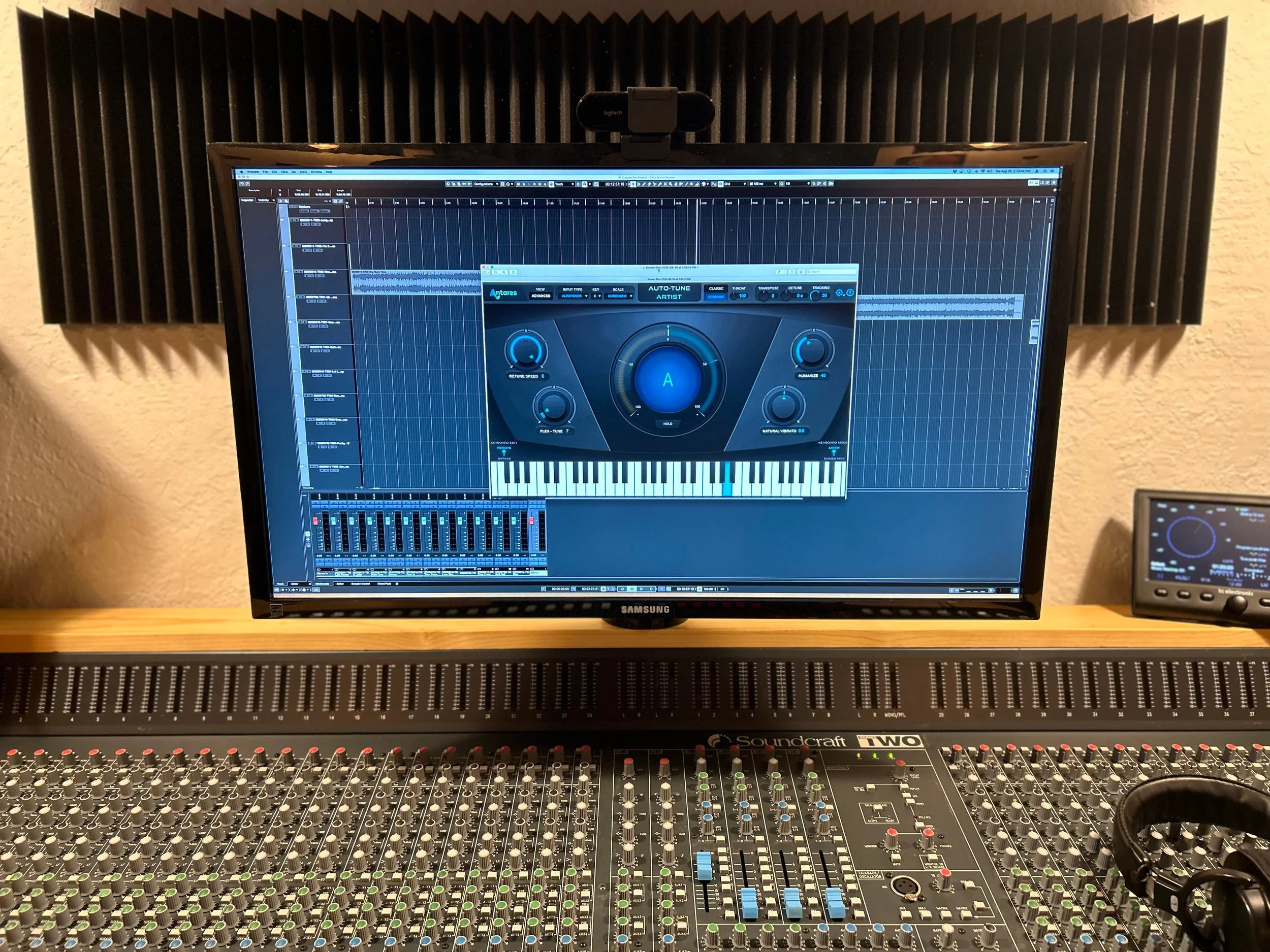
1. The Basics: Fixing a Pitch Problem
This is the most straightforward form of pitch correction- solving the problem of a note being out of tune. Most DAWs allow you to zoom in on a segment of audio and shift it up or down by a few cents or semitones. It’s algorithm-driven, direct, and mostly transparent. Whether you’re working in Logic, Pro Tools, Ableton Live, or any modern DAW, basic pitch-shifting tools are built in and effective when used with care.
2. Autotune as a Real-Time Process
Autotune (capital A) is actually a registered trademark of Antares, whose plugin has become synonymous with real-time pitch correction. This method involves applying a plugin or hardware unit to an audio signal and feeding it information about the key or scale- so it knows what to correct. Autotune then adjusts notes in real time to match that key.
It can be subtle, used just to tighten up a pitchy performance- or it can be pushed to the extreme, creating that signature robotic, hard-tuned effect made famous by artists like T-Pain, Cher, Kanye West, and Travis Scott.
In some genres, that sound is part of the aesthetic. In others, it’s meant to be invisible. Either way, it’s a powerful tool.
3. Melodyne and Deep Editing Tools
Software like Melodyne takes pitch correction several steps further. Melodyne allows you to dig into individual notes and manipulate their pitch, vibrato, dynamics, phrasing, and even timbre. It’s not real-time- it’s detailed, hands-on editing, and incredibly powerful when used with a clear intention.
That said, it also opens the door to over-editing. When every vocal is perfectly quantized and tuned, you risk losing the human feel that made it special in the first place.
No “One Best Tool”- Just the Right Tool for the Job
Each of these methods has its place. Pitch-shifting in a DAW is simple and fast. Autotune is great for either subtle smoothing or stylized effects. Melodyne gives you deep control when needed.
It’s not about which is best- it’s about which is right for the performance and the artist. One may be a more powerful tool, but that doesn’t mean it’s the only way to get great results. Used thoughtfully, any of them can help bring a song to life.
How We Approach Pitch Correction at Widget
At Widget, we start with the performance. That’s at the core of our process- just like we shared in our post about our analog-first studio approach. We’d always rather put in the time and energy upfront to get a performance we believe in.
One of the ways we do that is through vocal comping- stitching together the best moments from multiple takes to create one strong, expressive performance. (Here’s a good overview of vocal comping if you're curious.)
Only after we’ve done that do we even consider pitch correction tools- and if we do, it’s always a collaborative decision with the artist. Every choice should serve the song and respect the performance.
Why We Prefer to Stay Off the Grid (When We Can)
To be honest? We’d love to never use pitch correction. Not because the tools are bad, but because we believe the best vocal takes don’t need to be ironed flat by an algorithm.
When you lean too hard on pitch tools, there’s always a cost. You might clean up a note, but you might also lose the vibe, the charm, the small imperfections that gave it soul.
With time, patience, and care, we believe you can always capture the right performance- without sacrificing the human feel that makes it resonate.
Let’s Make Something Real
Whether you’re chasing a raw, unfiltered vocal or exploring creative pitch effects, we’re here to help you bring your vision to life- with intention, honesty, and great sound.
Ready to book your next session or talk through your project? Reach out here- we’d love to hear what you’re working on.
Let’s make something that feels like you.
